Insulation is one of the least exciting line items on a custom home budget, and one of the few you'll feel every single day. It decides whether the upstairs bedrooms are comfortable in August, how hard your air conditioner works, and how much road noise you hear from the living room. Here's how spray foam actually works, what Texas code requires, and the honest trade-offs, so you can have a real conversation with your builder about it.
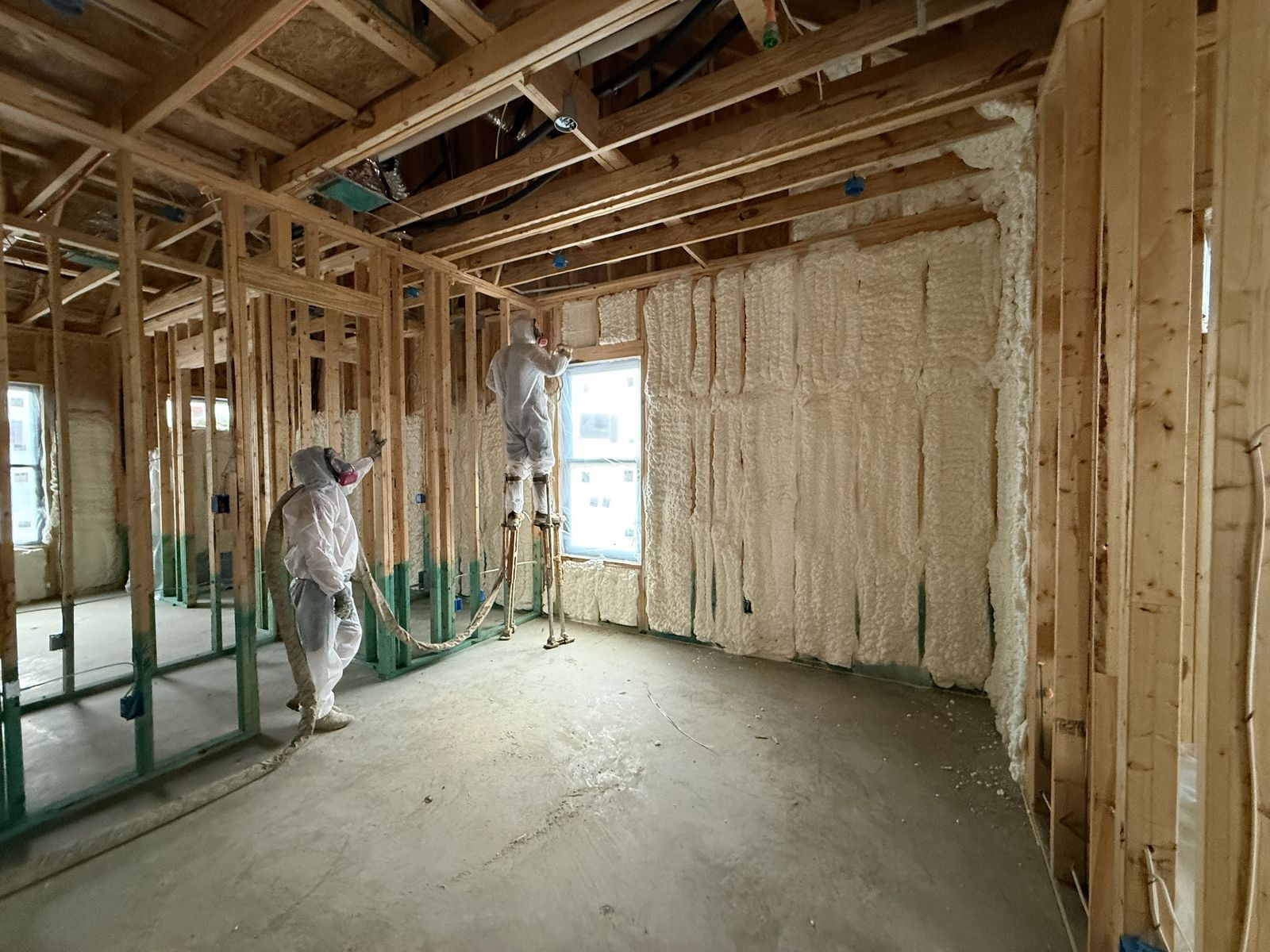
Why Insulation Works Differently Here
Most of what you read about insulation was written for cold climates, where the goal is keeping heat in. In North DFW the bigger job is keeping heat out for five or six months a year.
On a summer afternoon a traditional vented attic can run far hotter than the air outside. In most Texas homes the air conditioning ducts, and often the air handler, sit up in that attic. So the cold air you paid to make travels through the hottest place on your property before it reaches a room. Any leaks in that ductwork dump cooled air into the attic and pull hot, humid attic air back in.
That's why air sealing matters as much as R-value here. R-value measures how well a material slows heat moving through it. It says nothing about hot air simply leaking around it, through gaps at top plates, outlets, can lights, and attic hatches. Fiberglass batts and blown insulation slow heat, but air passes through them. Spray foam slows heat and stops air.
What Texas Code Actually Requires
Texas has a statewide minimum energy code for homes. Since September 1, 2016, it has been the energy chapter of the 2015 International Residential Code, adopted by the State Energy Conservation Office (SECO). In 2025 the Legislature passed SB 783, which lets SECO adopt newer editions after a cost-benefit review, so expect that statewide minimum to move in the next few years.
Cities can adopt their own, newer editions on top of that. In North Texas, the regional council of governments (NCTCOG) publishes recommended local amendments to the energy code, most recently for the 2024 edition, and many cities adopt them. Depending on the map your city uses, North DFW falls in climate zone 2 or 3. In practice that means the exact insulation and air-tightness numbers on your permit depend on which city you build in. Northlake, Flower Mound, Southlake and Keller may not all be on the same edition, and the rules for a lot in unincorporated Denton County can be different again.
One requirement that surprises people: under the 2015 code, a new home has to pass a blower door test. A technician fans air out of the house and measures how much leaks back in. The limit is 5 air changes per hour at test pressure in zones 1 and 2, and 3 in zones 3 and up. A sloppy house can fail. A well-sealed spray foam house usually passes easily.
Code is the floor, not the goal. Every house that gets a certificate of occupancy met the code. The difference between a code-minimum house and a comfortable one is how far past the minimum the builder goes, and how carefully the details are done.
Open-Cell vs. Closed-Cell, Side by Side
Both are sprayed as a liquid that expands into foam. They behave very differently once they cure.
| Open-cell | Closed-cell | |
|---|---|---|
| Feel | Soft and spongy, like a dense sponge | Hard and rigid |
| Density | About 0.5 lb per cubic foot | About 2 lb per cubic foot |
| R-value per inch | About 3.5 to 3.8 | About 6 to 7 |
| Air barrier | Yes, at roughly 3.5 inches or more | Yes, at about 1 inch or more |
| Vapor barrier | No. Water vapor can pass through | Yes, at about 1.5 inches or more |
| Sound | Better at softening sound | Less effective for sound |
| Cost per inch | Lower | Often two to three times higher |
Open-cell is the workhorse in warm climates. It fills a 2x4 or 2x6 wall cavity at a reasonable cost, seals air, quiets the house, and lets moisture dry out rather than trapping it. Manufacturers generally point to it for the southern and milder climate zones, which is where we are. It's what we use on our homes.
Closed-cell earns its price in specific spots: places that need a lot of R-value in a thin space, areas that need a vapor barrier, exterior insulation, and spots where its rigidity adds stiffness to the assembly. It's rarely the right call to spray an entire North Texas house with it.
On price, national cost guides have put open-cell somewhere around 40 to 75 cents per board foot (one square foot, one inch thick) and closed-cell around $1 to $2.25. Chemical prices move, so use those to compare the two, not as a quote. What matters on a real house is the total for the walls and roof deck on your plan, compared with the batts or blown insulation it replaces.
Walls, and the Bigger Question: The Attic
Foam in the walls is the simple part. The bigger decision is what happens overhead.
In a vented attic, insulation lies on the ceiling and the attic stays hot. In a sealed (unvented) attic, foam is sprayed on the underside of the roof deck instead, and the attic becomes part of the conditioned house. It isn't kept at room temperature, but it stays close to it instead of baking. The residential code allows sealed attics when specific conditions are met.
The payoff in Texas is the ductwork. With a sealed attic, the ducts and air handler sit inside the insulated envelope, so a small duct leak leaks into the house instead of into a hot attic. For a home with long duct runs, a second story, or a bonus room over the garage, that can be the difference between a room that's always hot and one that isn't.
This is how we build. On our homes, we spray open-cell foam on the underside of the roof deck, so the attic is sealed and the ductwork up there sits inside the insulated envelope instead of in a hot attic.
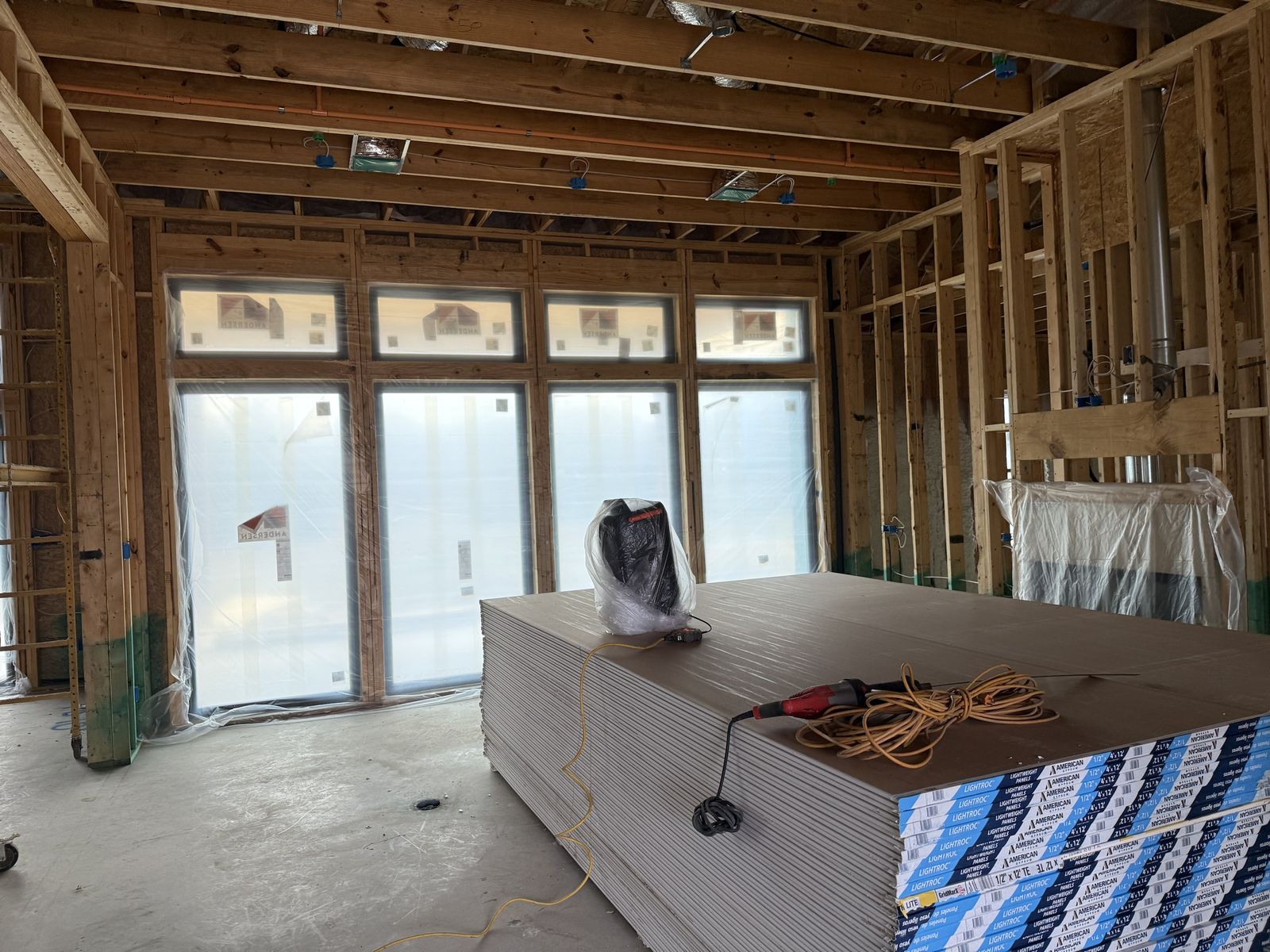
A few details that should be on the plan if you go this route:
- Fire protection. Depending on the product and how the space is used, foam in an attic may need an ignition barrier or thermal barrier, usually a coating or a covering. This is a code item, not an upgrade.
- Dry framing first. Foam should go over dry lumber and decking. Sealing wet wood in is how moisture problems start.
- Attic storage and access. A sealed attic is a better place to store things, since it isn't baking all summer. Plan the decking and access with that in mind.
The Honest Downsides
Spray foam is a good product with real trade-offs. Any builder recommending it should tell you these up front:
- Up-front cost. It costs more than batts or blown insulation. How long it takes to pay back depends on the house, the attic design, and your energy rates.
- Roof leaks are harder to spot. With foam on the roof deck, a small leak can soak into the foam or decking before it ever shows on a ceiling. Home inspectors raise this often. It's one reason roofing quality and flashing details matter even more in a foam house.
- Roofing warranty questions. Some shingle manufacturers have cautioned about foam applied directly to the underside of the deck. Ask your builder to confirm the roofing warranty terms for the specific roof on your plan.
- Installation quality is everything. Spray foam is mixed on site, so the crew matters. Ask who installs it, how they're trained, and how they check thickness and coverage. Occupants should stay out during application and for the time the manufacturer specifies afterward.
- It's hard to undo. Removing foam later for a remodel or repair is messy and expensive. Get the wiring, plumbing and low-voltage runs right before it goes in.
A Tight House Needs Fresh Air and a Right-Sized AC
This is the part that gets skipped, and it's where foam houses go wrong.
Once a house is sealed tight, it no longer "breathes" through leaks. That's the point, but it means fresh air has to be brought in on purpose. The residential code requires whole-house mechanical ventilation once a home tests tight enough, usually a fresh-air intake tied to the HVAC system or a dedicated ventilation unit. Without it, cooking smells, humidity, and indoor pollutants hang around.
A tight, well-insulated house also needs less air conditioning. The code requires heating and cooling equipment to be sized from a room-by-room load calculation (ACCA Manual J), not a rule of thumb. That matters more in a foam house. An oversized unit cools the air quickly and shuts off before it has pulled the humidity out, so the house feels cold and clammy at the same time. In North Texas, getting humidity out is half the job.
“Insulation, air sealing, ventilation and the AC are one system. Upgrade one without the others and you won't get what you paid for.”
Foam Is Only Part of the Air Barrier
Spray foam seals the cavities it fills. The rest of the shell still has to be sealed: the sheathing seams, the windows and doors, the slab edge, and the penetrations where pipes, vents and wires leave the house.
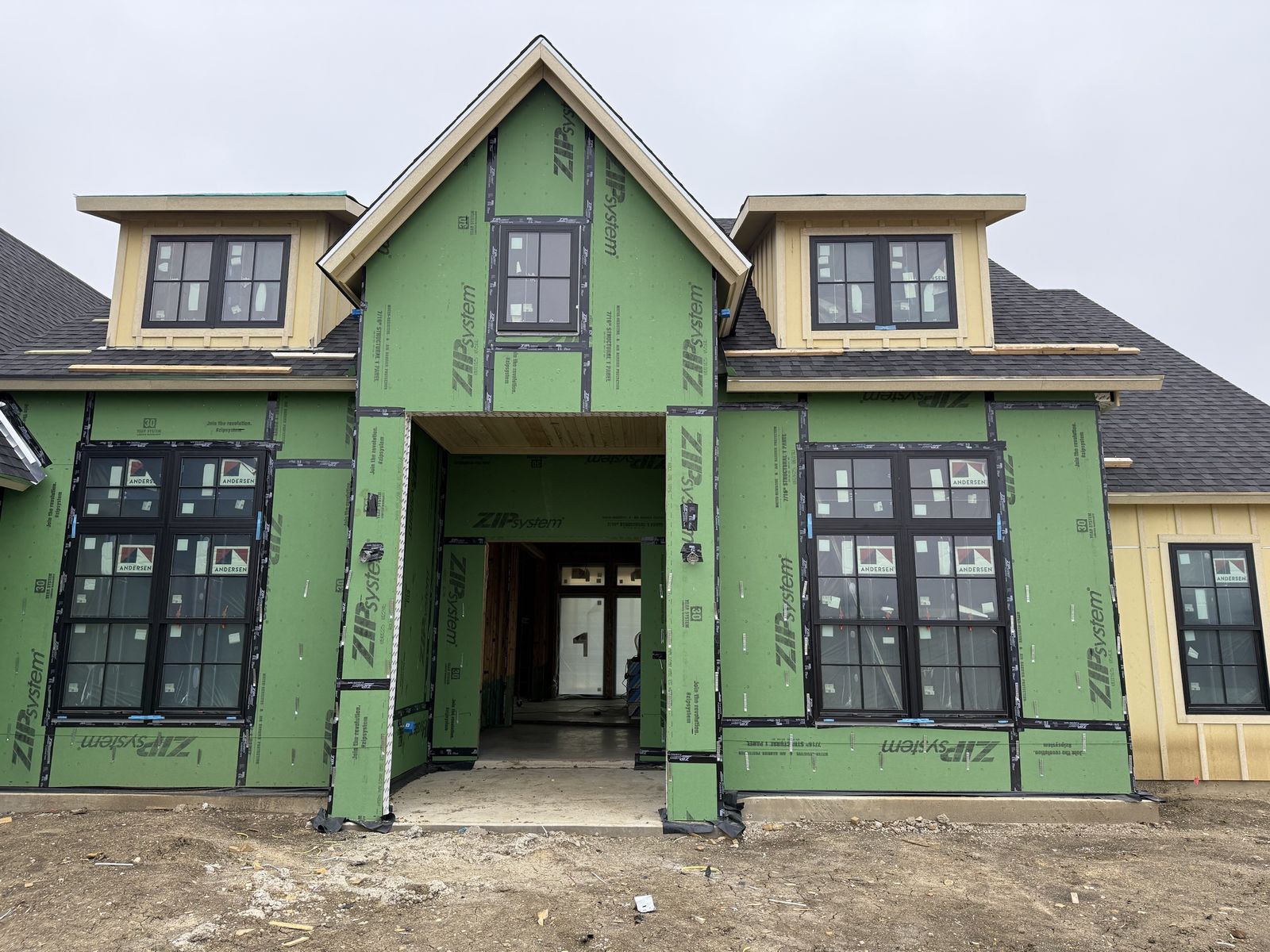
Taped structural sheathing, carefully flashed windows, and sealed penetrations all show up on the blower door test. So does sloppy work. Ask to see your home's test result. It's a single number that tells you how carefully the shell was built.
So Is It Worth It?
The EPA's ENERGY STAR program estimates that homeowners save an average of about 15 percent on heating and cooling costs, or about 11 percent on total energy costs, by air sealing and adding insulation. That figure comes from upgrading existing homes, not new construction, but it shows how much air leakage costs in a typical house.
On a custom home in the $1 million and up range, the energy bill is only part of it. Buyers who choose foam usually talk about comfort first: upstairs rooms that stay close to the thermostat setting, fewer drafts, less dust, and a noticeably quieter house. Our North DFW cost guide puts it simply: upgrades like this cost more up front and show up later as lower bills and a quieter house.
Where it's not worth it is when foam is sold as a magic fix: sprayed into a house with leaky ducts in a vented attic, no fresh-air plan, and an AC sized the old way. You'd pay for the upgrade and miss most of the benefit.
Questions to Ask Your Builder
- Which energy code edition does the city or county for my lot enforce?
- Open-cell, closed-cell, or a mix, and where does each go on my plan?
- Vented or sealed attic? Where will the ducts and air handler sit?
- How will fresh air be brought in, and how is humidity controlled?
- Who does the HVAC load calculation, and can I see it?
- Who installs the foam, and how is thickness checked?
- What did the blower door test measure on your last few homes?
- Does the foam choice affect my roofing warranty?
A builder who answers these plainly has thought about the house as a system. For the full hiring list, see 25 Questions to Ask Before You Hire a Custom Builder. And if you're curious what's under the house as well as what's in its walls, our guide to post-tension slabs on North Texas clay covers the foundation.